

Follow a question
Books for Curious Minds
Books that invite children to wonder, imagine, notice patterns, explore possibilities, and consider another point of view.
Some children can turn one little question into an afternoon of discovery. This shelf is for those moments—and for the grown-ups who are happy to say, “I don’t know. Let’s find out together.”
We’re beginning with a book that takes that curiosity all the way into space.
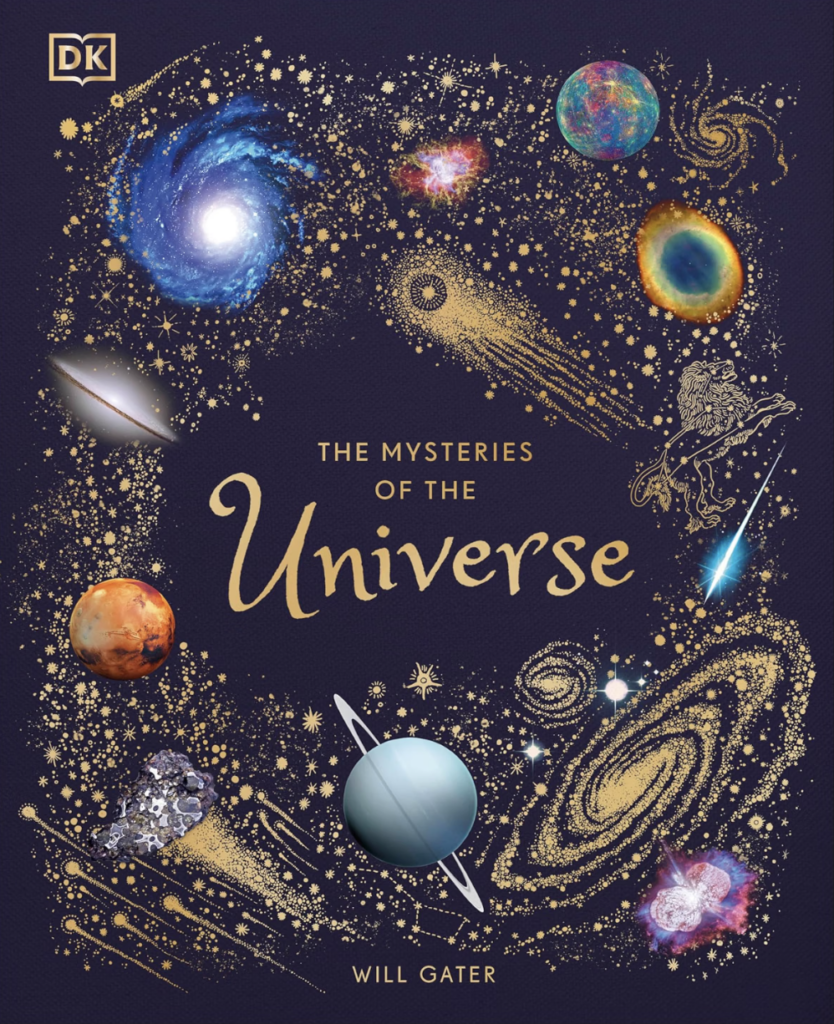
Space · Nonfiction · Discovery
The Mysteries of the Universe
Written by Will Gater
Illustrated by Angela Rizza and Daniel Long
Published by DK Children
For the child who looks up and asks, “What’s out there?”
This illustrated nonfiction book introduces readers to more than 100 objects in space, from planets and asteroids to distant galaxies. Photographs, artwork, and short descriptions give children plenty to examine at their own pace.
You can start with a picture that catches your child’s eye, read about it together, and see where the conversation goes. There’s no need to begin on page one or finish it in a sitting.
A note about fit: A lovely choice for an elementary-age child interested in space. Share selected pages with a younger listener, or let an older reader linger over the details. Interest and reading comfort matter more than a number on an age label.
This is an affiliate link. If you purchase through it, I may earn a commission at no extra cost to you.
See The Mysteries of the Universe on AmazonChoose the edition and format you prefer, or ask for the book at your local library.
Through my teacher’s lens
A good question is a wonderful place to begin.
With a book like this, I’d leave room for browsing. Let your child choose a page, study the pictures, and tell you what they notice before you start explaining.
My gifted education background makes me especially interested in the questions children ask. But you don’t need a gifted label to belong on this shelf. Curiosity is welcome here.
A little conversation
Try one question and follow your child’s lead.
- Which picture made you stop and look? What did you notice?
- Choose two objects in the book. How are they alike, and how are they different?
- If you could send a spacecraft to investigate one thing, what would you want it to find out?
- What are you still wondering about?
Start a wonder journal
Fold a few sheets of paper into a small notebook. On one page, draw an object from the book. Beside it, add three little headings: “I notice,” “I learned,” and “I wonder.”
Your child can draw, write, or dictate while you jot down their words. Pick one question to explore another day. An unanswered question makes a fine bookmark.
For the child who wants to go deeper
Ask, “How might scientists learn about something they cannot visit?” Choose one object from the book and look for clues about the tools or evidence used to study it. Make room for the difference between what we observe, what we infer, and what we still want to know.
Book details: visit the publisher’s page. Artwork credits: visit the author’s page.
There’s always another question.
This shelf will grow to include more books that encourage children to look closely, think flexibly, and follow an interest. For now, choose a page and enjoy discovering something together.
Back to Audrey’s Bookshelf